
- Disease Overview
- Treatment Overview
MF-CTCL is a rare and generally incurable condition that predominantly affects the skin, which can lead to persistent and debilitating symptoms such as pruritus, pain, and fatigue, which can detrimentally affect patients’ quality of life.1–3
In patients with advanced-stage disease, in addition to the skin, extracutaneous involvement (lymph nodes, blood, and/or viscera) may occur.1
Incidence

The estimated annual incidence of MF-CTCL in the UK is ~4 cases per million people.4
Cause
The exact cause of MF-CTCL is unknown, but several risk factors have been proposed:2
Genetic and epigenetic abnormalities

Environmental and occupational exposure to solvents and chemicals

Human T-lymphotropic virus Type 1 infection
Stages of MF-CTCL

Patch stage2
The earliest skin lesion that appears is an erythematous, or brownish scaly patch, which may show slight atrophy.
Single or multiple skin lesions can develop in several body locations.

Plaque stage2
Lesions appear larger with evident infiltration, along with the appearance of new lesions.
The lesions in the plaque stage are annular or horseshoe-shaped with an infiltrated base, raised, well-defined edges and asymmetrical distribution.
Tumour stage2
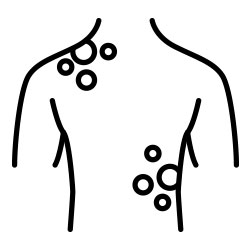
The skin lesions seen in the tumour stage are erythematous-purplish papules or nodules of larger diameter.
The frequency of lymph nodal and visceral dissemination is highest at the tumour stage.

Survival
The 5- and 10-year overall survival rates for patients with MF-CTCL are 80% and 57%, respectively5
Signs and symptoms of MF-CTCL include, but are not limited to:

Pruritus1,2

Erythroderma1

Alopecia1,2

Fatigue3

Fever3
Symptoms of MF-CTCL may interfere with daily activities and lead to:1

Insomnia

Anxiety

Depression

MF-CTCL is associated with impaired cellular and humoral immunity, which leads to an increased risk of experiencing opportunistic infections and a higher risk of developing secondary malignancies (such as other types of lymphoma)1
Diagnosis
Diagnosing early-stage MF-CTCL is highly challenging as skin manifestations and biopsy findings may be misinterpreted as non-specific and reactive changes.1,5
Patients often have additional dermatologic presentations (such as erythroderma or non-specific dermatitis), with symptoms for years to decades before receiving a definitive diagnosis of MF-CTCL.1
Diagnostic components in MF-CTCL

Physical exam1
The following aspects of each skin lesion should be recorded:
- Size
- Location
- Skin surface area involvement

Skin biopsy1
Obtaining a representative skin biopsy is a critical step in the diagnostic work-up
It is recommended to obtain multiple skin biopsies (each consisting of at least a 4mm punch biopsy) over the most indurated area
Topical treatment should be stopped for >2 weeks prior to conducting a skin biopsy

Laboratory tests1
- Full blood count
- Routine chemistry including lactate dehydrogenase
- Histologic confirmation

Imaging studies1
Computed tomography (CT) and fluorodeoxyglucose-positron emission tomography (FDG-PET) scans may be required to evaluate for signs of extracutaneous disease
CT, computed tomography; CTCL, cutaneous T-cell lymphoma; FDG-PET, fluorodeoxyglucose-positron emission tomography; IL, interleukin; MF-CTCL, mycosis fungoides-type cutaneous T-cell lymphoma; UK, United Kingdom.
References:
- Lee H. Blood Res. 2023;58(S1):66–82.
- Vaidya T, Badri T. Treasure Island (FL): StatPearls Publishing. 2024.
- NICE. Available at: https://www.nice.org.uk/guidance/ta720/resources/chlormethine-gel-for-treating-mycosis-fungoidestype-cutaneous-tcell-lymphoma-pdf-82611187320517. Date accessed: November 2025.
- Hawkins N et al. J Comp Eff Res. 2023;12(10):e230017.
- Gilson D et al. Br J Dermatol. 2019;180(3):496–526.
Treatment of mycosis fungoides-type cutaneous T-cell lymphoma (MF-CTCL) varies depending on factors such as the disease stage (early vs advanced), disease extent, severity of symptoms, and extracutaneous site involvement.1–3
In early-stage MF-CTCL, the therapeutic goal is to provide symptomatic relief and improve patients’ quality of life. Treatment is generally focused on skin-directed therapies rather than systemic chemotherapy or immunotherapy due to the localised state of the condition and generally good survival outcomes.1–3
In advanced-stage MF-CTCL, the therapeutic goal is to prolong life, while still providing symptomatic relief and maintaining disease control. Patients may be treated with a variety of treatments, including skin-directed therapies, total skin electron beam therapy (TSEBT), systemic therapy, and allogeneic stem cell transplantation.1–3
Treatment for early-stage (IA–IIA) MF-CTCL
Treatment for early-stage disease generally involves the use of skin-directed therapies, with the exact intervention based on several factors, including the extent of the disease, patient age, comorbidities, and treatment availability.1–4
Patients with early-stage MF-CTCL usually undergo multiple treatments in different sequences until they experience a loss of response or the disease spreads beyond the skin.3,4

Topical treatments such as corticosteroids and Ledaga (chlormethine) are options as initial therapy1–4

Topical corticosteroids relieve symptoms of redness and itchiness and may reduce patches and plaques, but the duration of response is short4

Phototherapy is the standard of care for patients whose disease is not controlled with topical therapy3

Phototherapy is not ideal for patients with limited skin involvement (covering <10% of skin surface) because the whole skin is exposed to ultraviolet (UV) radiation, which may increase the risk of developing skin cancer4

Localised palliative radiotherapy is effective for plaques and small or large tumours, which respond to relatively low doses of radiotherapy3

TSEBT should be considered as a second-line treatment for stage IB MF-CTCL that has relapsed or is refractory to other skin-directed therapies. TSEBT can also be used as first line in patients with extensive cutaneous disease3

Chemotherapy is contraindicated given that low-grade disease is relatively resistant to chemotherapy and response duration is short3

The effects of various skin-directed therapies, including phototherapy and sometimes radiotherapy, are not long-lasting, causing patients to cycle between treatments, and subsequently forcing them to travel for repeated hospital appointments4

Therapies that offer efficacy in controlling symptoms that can be taken at home can be a good option for patients with early-stage MF-CTCL4
About Ledaga (chlormethine)
Ledaga is indicated for the topical treatment of MF-CTCL in adult patients.5
Treatment for advanced-stage (IIB–IV) MF-CTCL
The key goals of therapy for advanced-stage disease are to maintain long-term disease control and extend survival, with the choice of therapy being dependent on factors such as the extent of the disease, drug toxicity profile, extracutaneous involvement, and presence of life-threatening disease.1–3

Skin-directed therapies can alleviate skin symptoms such as pain and pruritus, and most patients will need intermittent topical treatments (especially topical steroids)3

Local radiotherapy can be useful for treating extensive disease involvement of the hands and feet, and for palliative purposes3

Bexarotene is indicated in the EU and UK for the treatment of skin manifestations of advanced stage disease in adults refractory to at least one systemic treatment.3,6 Maximum responses may take 6 months, and bexarotene should be continued until loss of response3

TSEBT is an effective intervention that can achieve high rates of durable complete response in patients with stage IIB MF-CTCL. TSEBT can also be utilised as debulking treatment prior to allogeneic stem cell transplantation3

Systemic chemotherapy is usually reserved for patients with advanced disease, or disease refractory to skin-directed therapies or immunobiological therapy, being palliative rather than curative3

Allogeneic stem cell transplantation is the only curative modality for MF-CTCL and should be considered for patients with uncontrolled advanced-stage disease1–3
To learn more about MF-CTCL and treatment options, please view our resources by clicking on the link below.
EU, European Union; MF-CTCL, mycosis fungoides-type cutaneous T-cell lymphoma; TSEBT, total skin electron beam therapy; UK, United Kingdom; UV, ultraviolet.
References:
- Lee H. Blood Res. 2023;58(S1):66–82.
- Vaidya T, Badri T. Treasure Island (FL): StatPearls Publishing. 2024.
- Gilson D et al. Br J Dermatol. 2019;180(3):496–526.
- NICE. Available at: https://www.nice.org.uk/guidance/ta720/resources/chlormethine-gel-for-treating-mycosis-fungoidestype-cutaneous-tcell-lymphoma-pdf-82611187320517. Date accessed: November 2025.
- Ledaga (chlormethine) Summary of Product Characteristics.
- Bexarotene Summary of Product Characteristics.
IE-NPS-0114 | June 2026