
- Disease Overview
- Treatment Overview
To learn more about Renal Cell Carcinoma (RCC) and Treatment, please visit our resources by clicking on the link below.
Renal cell carcinoma (RCC) is a heterogenous disease and the most common type of kidney cancer, accounting for ~90% of cases, and for 3% of all cancers globally.1–4
The incidence of RCC has steadily increased over the past two decades both worldwide and in Europe by an annual rate of ~2%, with approximately 99,200 new RCC cases and 39,100 kidney cancer-related deaths in the EU in 2018.1
RCC demonstrates high variability in its clinical presentation, with ~25% of patients being asymptomatic and ~60% of cases being detected incidentally, making the classic triad of flank pain, gross haematuria, and palpable abdominal mass less frequent than in the past.1–5
Suspicion of RCC should prompt evaluation with laboratory tests, imaging studies, and subsequent kidney tumour biopsy to promptly diagnose this type of cancer, being highly treatable in its early stages, but associated with poor survival outcomes in its advanced form.1,2,5,6


















To learn more about Renal Cell Carcinoma (RCC) and Treatment, please visit our resources by clicking on the link below.
Treatment for renal cell carcinoma (RCC) depends on factors such as the disease stage, tumour size, patient age, comorbidities, and treatment availability.1–6
The standard of care for patients with localised disease involves surgical excision of the tumour by either partial nephrectomy (PN) or radical nephrectomy (RN), which can potentially be curative.1–3
Elderly patients with significant comorbidities or a limited life expectancy may be managed with active surveillance or ablative techniques.1–3
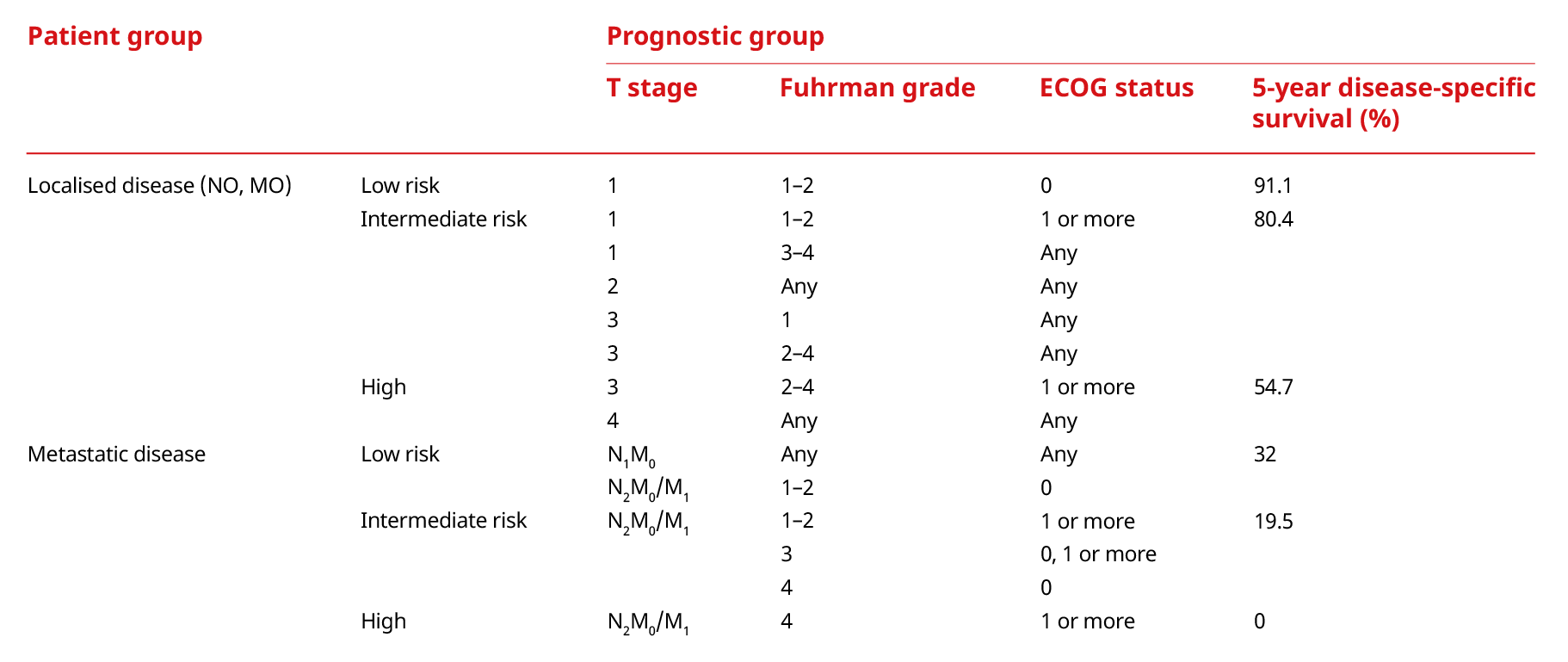
Systemic treatment with targeted agents, including vascular-endothelial growth factor (VEGF) inhibitors and immune checkpoint inhibitors (ICIs), represents the mainstay of therapy for patients with inoperable or metastatic RCC.1–3







IE-NPS-0121 | June 2026